
With the average price of a detached home in Toronto now exceeding a million dollars, many young families are seeking refuge in suburban neighbourhoods. But, are the sacrifices made to live behind the urban trenches still really worth the added benefit of four exterior walls and a garden shed? If there is a compulsory commute required to fulfill your white picket dreams, I would implore that such lofty visions of quaint picnics and Land Rovers exists only as such. When translated into the harsh reality of superhighways, cultural isolation and maudlin civility, your distant home nestled amongst rows of pruned trees, pristine turf, and row houses will become more of a mausoleum than a place to live life. in the below, allow me to dispel the many enchantments of the suburban lifestyle, and bolster the energy and vibrancy of the metropolis
The crux of the decision to jump the metropolitan ship and forage a new life where SUVs, juicy burgers, and gingham shirts roam free most often balances on the required commute length — the size of home and amount of privacy are positively correlated with the amount of life sacrificed commuting in a car. I cease to find it entertaining when hardened suburbanites, in an effort to assuage their social abnegation, distill the inconvenience of living in their pastel hinterland down to a very precise and undoubtedly deflated number: their commute time. Its always the familiar: “oh, it really only takes about 41 minutes on the train,” or my personal favourite: “I avoid traffic so it only takes about 50 minutes door-to-door”. I feel that instead of actual measurements of time, these “numbers” are more often arbitrary representations meant to ease the conscience of the individual claiming them.
Affectations aside, the fact is when living exterior to the urban metro system, you are likely at an hour commute time or an hour fifteen from door to door. This time equates to about 15 hours per week, 60 per month, and a staggering 720 hours when extrapolated over the course of a year. Given an average salary of $65k, that equates to lost earnings of roughly $26k in addition to all transit expenses, and doubled if you live with a working spouse who suffers a similar commute. Irregardless of how you would spend the added time if you were not driving, whether it be working or being generally productive, it still has an adverse affect on your life. No one lives forever. Time is non recoverable, it is the most precious resource we have, and how we use it will dictate the richness of our lives, and the effect we have on others around us.
Along with time, it seems that the hours lived in a healthy body are also at an all time premium. Inactivity and cardiopulmonary diseases have a very sobering parallel. I would not be surprised in the least if such health occurrences were positively correlated with time spent in cars. Whilst driving, it is not only our bodies in a state of atrophy, but our minds as well. It is well known that driving for extended periods of time slips us into a state of highway hypnosis. Have you ever tried to recall your morning commute? what you passed by, what was played in the radio? Admittedly, once the parking brake is engaged, i myself have experienced hours of driving evaporate from my mind seemingly instantaneously and rather alarmingly as well.
Though the grass may literally be greener, I feel the proverbial grass remains most lush in the urban jungle. While I wholeheartedly admit to having lived the majority of my life in urban centers, I fail to understand the draw of the suburban. The prospect of children and in-laws has sent even the most hardened of suburbanites fleeing to the suburbs. Similarly to how the intrepid salmon makes his way back to the spawning pools with hopes of reproducing after a life of glorious freedom, the city dwellers retreat to the suburbs, for seemingly the same purpose, only to be met with a similar end as the fateful salmon.
As time passes do we become disillusioned with the urban lifestyle in search of something more subdued… More forgiving? Is it the constant hustle and bustle of the city we once embraced for the opportunity it engendered, but now resent for the numerous hazards it presents? Could it be it’s the proximity of interested strangers you once laughed with who are now estranged to our life of familial engrossment? Or, maybe it’s the otherwise fanciful city dwellings and complimentary lifestyle known in your formative bachelor years to be so inviting, now besmirched by constant domestic activity. To this, I argue that it is instead the disillusionment which is false.
As is most often cited and known, it is simply the sheer immensity of space that draws upon the materialist psyche bred into every (North) American man woman and child. Our culture encourages consumption and contextualizes “moderation” by juxtaposing cheeseburger salads with the viscerally satiating Big Mac. As (North) Americans, our consumption knows no bounds; we are always in need of space to accommodate our abundance of things. We have: cellars, basements, attics, garages, closets, storage sheds, cupboards, and coat racks, yet there is never enough. Why deprive yourself of a billiards table and bar, when you could simply relocate to the land of abundance. Tired of your nagging family? Why not dispense with them all together by immersing yourself in a home theatre and stocked liquor cabinet.
I feel as though the added space of the suburbs relieves our minds of familial and domestic obligations, and allows us to attend to our own needs and ambitions. Every room conveniently compartmentalizes the duties associated with fulfilling the American dream. The additional space allows for the comfort of a home office, the convenience of a massive pantry, and the children enough territory to occupy their time in blissful solitude. There is no need to concern yourself with the needs of contemptuous children or be distracted by the pedestrian concerns of spouses when you can simply stuff them away in separate and distinctly purposed spaces.
While a life in an urban centre does produce an abundance of challenges otherwise alleviated by suburban living, I do not necessarily believe depriving ourselves of these challenges leads to a fulfilling life. It is the challenges we face and our ability to approach and overcome them that defines true character. Adversity forces us to both constantly re-asses our approach to life and contextualizes the decisions we make. Without adversity we are naive to the complexity of social existence and defenseless to the throws of hardship. The inherent homogeneity of suburban living expunges the contradictions and challenges that brew opportunity.
In absolving ourselves of the bemusing social tensions and contradictions seated within the depths of metropolitan boroughs, we are unsubscribing to the social progression and liberty so coveted by American society. It is as if societal progression is a train from which people can depart and enter. Some people, unaware that it is in fact the journey that propels life, choose to get off in the places they feel most suitable to their needs. People get off the train because they feel going further will be too difficult, they fear it will be a violation to their understanding of the world thus far. The interminable cultural respite offered by the white picket purgatory allures those who are weakened by the cultural and societal pressures of the city and terrified of the outcomes such pressures might yield.
It is the heterogeneity of urban living which gives rise to the ever more inspiring evolution of American society. The continual progression of American culture has become the most defining characteristic of 21st century — post modern — America. I can assure you that the future will judge those who chose to adopt a humor of tolerance instead of acceptance when facing transgressions of the marginalized. The 1960s tolerated black culture; the 21st century embraces and accepts the immense value it adds to American culture as a whole. Living in a homogeneous environment which enforces a static society creates a culture concerned with maintaining the statuesque — more in a spirit defiant of what happens exterior to the community gates than in concern for the occupants behind them.
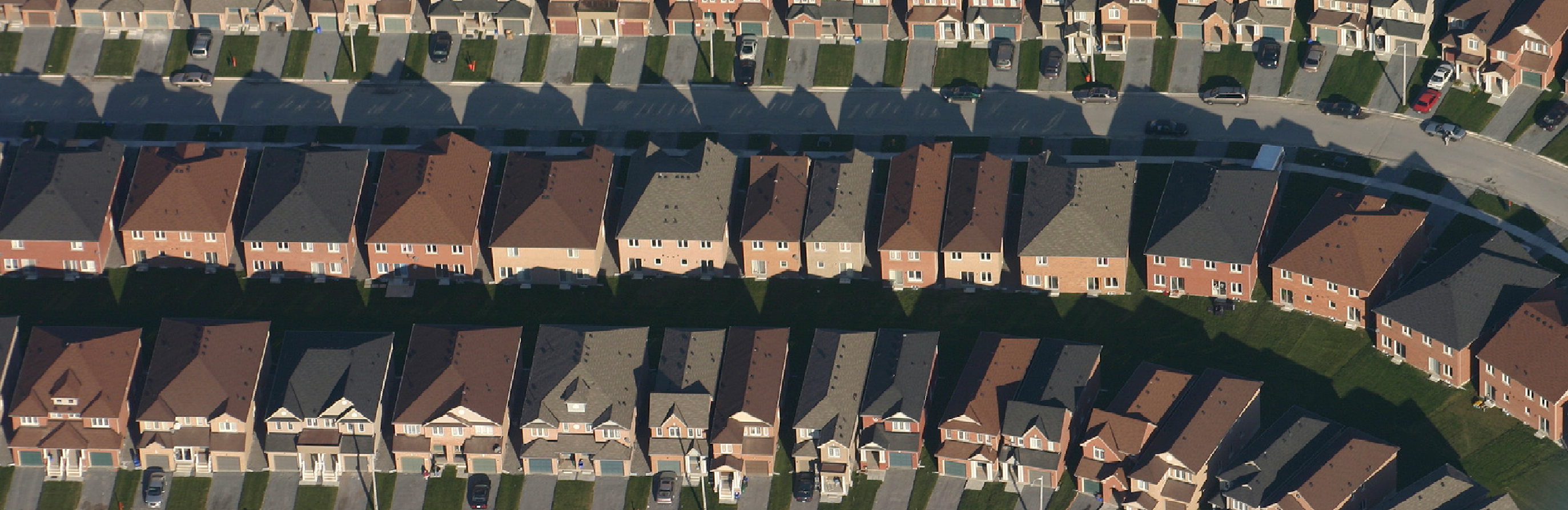
To this point, I feel children are the most damaged by such cultural vacancy. Much like nutritious food and exercise, children require an environment rich in knowledge, personality and juxtaposition to scrutinize the world around them and to develop the understanding and ideas one needs to forge a life of influence. How are children to correctly understand the ever more salient and increasingly complex issues plaguing our society such as race and poverty, or know the profound inspiration and motivation evoked through enterprise and social involvement when their vision is restricted by the myopic lens of suburban sensibility?
Leaving children to toil in such a cultural dystopia leaves them to develop an understanding of societal existence which is completely untethered to reality. How are children to understand the nuances of social structure when the closest thing they have to ethnic or socioeconomic diversity are the forlorn World Vision adverts spliced between segments of What Not to Wear. Constructing a knowledge framework from which to understand the complex economic and social systems of a society is crucial if one is to exist within those systems. Too often are news stories such as these splashed through the media only to be dismissed for the sociopathic mind which caused them, and not questioned for the society which bred the mind in the first place.
Further: perhaps the second most cited reason for making the move is crime. People feel the crime rate in urban centres far exceeds that of its peaceful suburban surrounds. And, aforementioned examples excluded, this is indeed true to an extent. However, I don’t believe the difference is really what people perceive it to be. As conveniently noted in the following 2011 entry by Elizabeth Kneebone and Steven Raphael:
– As crime rates (fall) and communities diversified, relationships between crime and community demographic characteristics weakened significantly
– Among suburban communities, older high-density suburbs registered the largest declines in crime rates.
– The gap between city and suburban violent crime rates declined in nearly two-thirds of metro areas
– Both violent and property crime declined significantly between 1990 and 2008 in the 100 largest metro areas, with the largest decreases occurring in cities.
The paper’s abstract goes on to conclude in-short:
In general, the nation’s largest metropolitan areas are much safer today than they were in years past. Within metropolitan areas, older, more urbanized, poorer, and more minority communities have benefited the most from these trends, narrowing the disparities between cities and suburbs and underscoring that crime is not a uniquely urban issue, but a metropolitan one. As such, jurisdictions that lagged in reducing crime rates since 1990 may benefit from looking to neighboring communities and similar regions for lessons learned and successful policies that helped significantly reduce property and violent crime over the last two decades.
For those living in Toronto, I might suggest this very interesting map created by CBC
I do however digress… I admit there are plenty of perfectly good reasons to live in a suburban area. perhaps you work nearby, enjoy a thriving local community, prefer the space to explore creative exploits, or are simply a log-cabin libertarian. Bias aside, I do understand that in many cases a move is completely justified. Nevertheless, I would implore that in such cases regular pilgrimage be made into the city simply to reconnect with what’s happening, otherwise the city might just leave them behind.
for further reading I would encourage the following:



 Property Prophet