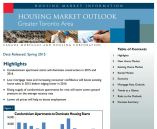
A review of the Canadian Mortgage and Housing Corporation’s spring 2015 Housing Market Outlook


Overall, the outlook is a healthy one.
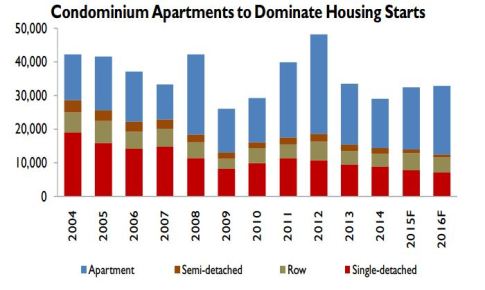 The topic of conversation continues to be condos. 2012 saw the highest number of condos breaking ground Toronto had ever seen. Now, unsurprisingly, three years later, those same projects are again breaking records as they hit the market en masse . with a total of 17,166 condo completions in the first quarter of 2015, we have already shattered ANNUAL totals of the previous 3 years. However, despite the vast amounts of supply, It seems increasing demand for low rise homes will keep pushing people into the high rise market, thus sustaining demand and leaving the market in the seller’s hand.
Now, the sinking construction costs due to the abundance of labour and machinery made available from this quarter’s completions will allow construction to continue unabated, with more than 32 000 homes (roughly half of which are condos) expected to break ground in 2015. In addition, the new found availability of construction resources may also serve to shorten the average 2 year waiting period between pre-construction sales and shovel-to-dirt.
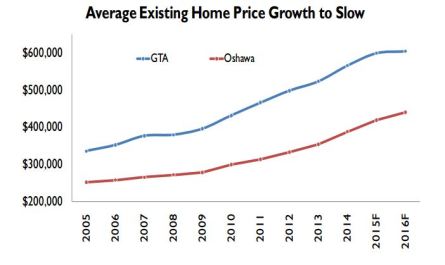 With the older gen y’ers now arriving in the business market and looking to raise families, the market for single family dwelling is expected to remain red hot. Yes, backyards and garden patios could not be more in demand. It appears families are leveraging tooth and nail to get their hand on at least something for the family golden retriever to shit in. The average price of a detached home in the downtown core now exceeds a staggering $2 000 000. However, with roughly 7 300 detached homes expected to start construction in the GTA from 2015 to 16, aspiring executives mustn’t fear — For the price of a small commute, a detached home in the greater GTA can still be wrangled for a more attainable yet still stratospheric $881 500. And, for those willing to commute even further, while not advised, the price is even further reduced. For those living more realistic life styles, the average price – throughout the GTA – of a home (i.e. house, condo, townhome… whatever) remains in the mid 600s, with a 1 bedroom condo hovering just above 300.
The hefty price gains made in the single detached market are largely due to the fact that there simply isn’t enough land anymore. There are no more up-and-coming neighbourhoods; there are simply trendy-rich-hipster neighbourhoods and warehouses. With the average single family dwelling expected to climb ~5.5% every year for the foreseeable future, families and those in search of privacy are getting pushed into town homes and low rises, which in turn pushes those looking for townhouses and low-rises in the interminable and evermore welcoming high-rise condo market. So, while condos continue to be built, it seems that demand will be there to snatch them up.
Economy
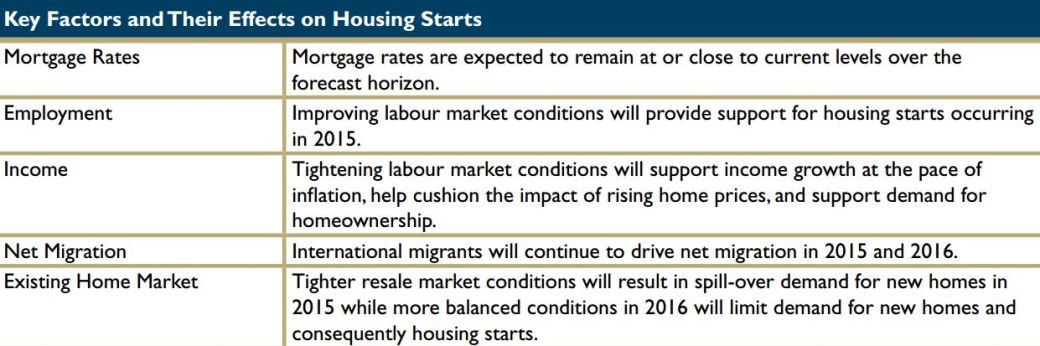
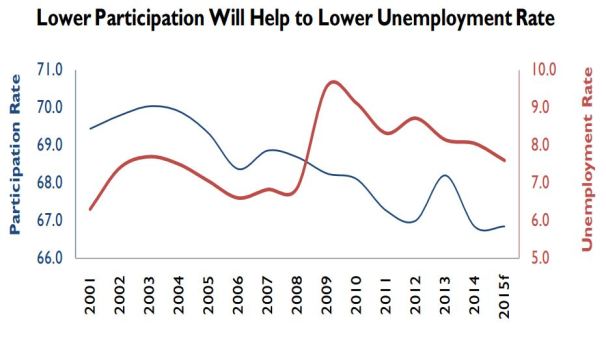
Total employment in Toronto is expected to grow by 1.7% in 2015, bringing down the employment rate to below 8% for the first time in seven years. This tightening of the labour market will further support income growth at the pace of general inflation, and keep the economic wheel turning.
While weaker oil prices will adversely affect the Canadian economy as a whole, the effect it will have from province to province will vary. Though the west may be suffering, Toronto and the rest of the golden horseshoe are expect to benefit from the low energy prices due to its reliance on manufacturing. Additional, local goods producers will benefit from both a strengthening US economy which will serve to maintain the current American-Canadian dollar spread, and continued favourable credit conditions.
The temporary ease in inflation and low energy prices will also leave consumers with a higher disposable income, benefiting the retail industry – A trend which is expected to slow in 2016 as inflation and energy prices recover. Retail and other consumer sectors are also expected to gain a marginal benefits from the summer 2015 Pan Am Games.
Notably: Toronto’s aging population and a disillusioned labour force have resulted in a 15 year low for labour participation in the GTA (~66%). While the aging workforce is expected to maintain a downward pressure on the workforce for the coming years, other factors such as increased migration, consumer confidence, and strong growth in working aged individuals are expected to strengthen labour participation.
The Rental Market
Even though a record number of condos will be entering the market this year (~13 000 units), a lack of “purpose built rental supply” (~1 500) and a steady growth in employment for millennials will maintain a vacancy rate below 2% — supporting a strong rental market well through 2015 and 2016, leaving the market in the property owners’ hands. However, “with the rising cost of home ownership and a greater preference for young adults to live within the urban core” the CMHC expects the number of purpose built rentals entering the market to increase in the cumming years, in-turn giving a much welcomed slight relief to the market.
One of the only factors suppressing rental demand during the last few years has been a decline in migrants to the GTA. Canadian migration has trended to the west in recent years, resulting in 20-year-low migration numbers for the GTA (~54,000). Migration is expected to recover slightly in the next two years with lower job prospects in the west due to declining oil prices. In addition, the new federal system for recruiting immigrants launched in January , Express Entry, is expected to increase migration and allow for greater inflow into the GTA.
To Conclude
While a soft landing in the household market looks to be the general and hopeful consensus, record high home prices, record debt levels and a tepid economy and job market leave the housing market highly susceptible to adverse shocks. As the CMHC relays in its report “ A disorderly unwinding of household sector imbalances, should it materialize, could have sizable negative effects on other parts of the economy and on inflation.”
If you have further questions, I highly recommend reading the report in full, below; or subscribing to the CMHC’s newsletter, here.
 Property Prophet